Imagine the unthinkable: a traumatic event has just occurred in your Seattle home or business, leaving behind not just emotional scars but hazardous biological materials. From unattended deaths to violent incidents, the aftermath demands immediate and expert attention. As a trusted local provider, Seattle Bio-Recovery specializes in compassionate, thorough biohazard cleanup to restore safety and serenity. In this ultimate guide, we’ll walk you through the process, offering practical advice tailored to the Pacific Northwest’s unique challenges, like our rainy climate that can complicate decontamination.
Whether you’re in Ballard or Renton, understanding biohazard cleanup is crucial for health and peace of mind. Let’s dive in.
Understanding Biohazards After Trauma
Biohazards are biological substances that pose a threat to human health, including blood, bodily fluids, and pathogens from incidents like suicides, homicides, or accidents. In Seattle’s dense urban environment, these situations can arise unexpectedly, affecting homes, offices, or public spaces.
Types of Trauma Scenes Requiring Cleanup
Trauma scenes vary, but common ones include:
- Unattended Deaths: When a body is discovered after days, decomposition accelerates, releasing fluids and odors. Our unattended death removal services address this sensitively.
- Homicides or Suicides: These involve blood spatter and tissue that can harbor diseases like hepatitis or HIV.
- Accidental Injuries: Falls or medical emergencies leaving bio-matter on surfaces.
In humid Seattle weather, these hazards can spread quickly, making professional intervention essential.
Health Risks Involved
Exposure to biohazards can lead to serious infections, allergic reactions, or long-term health issues. DIY attempts often worsen the situation, as improper handling aerosolizes pathogens. Always prioritize safety—contact experts like Seattle Bio-Recovery immediately.
The Step-by-Step Biohazard Cleanup Process
Professional biohazard cleanup follows strict protocols to ensure compliance with OSHA and EPA regulations. Here’s how Seattle Bio-Recovery handles it:
Initial Assessment and Containment
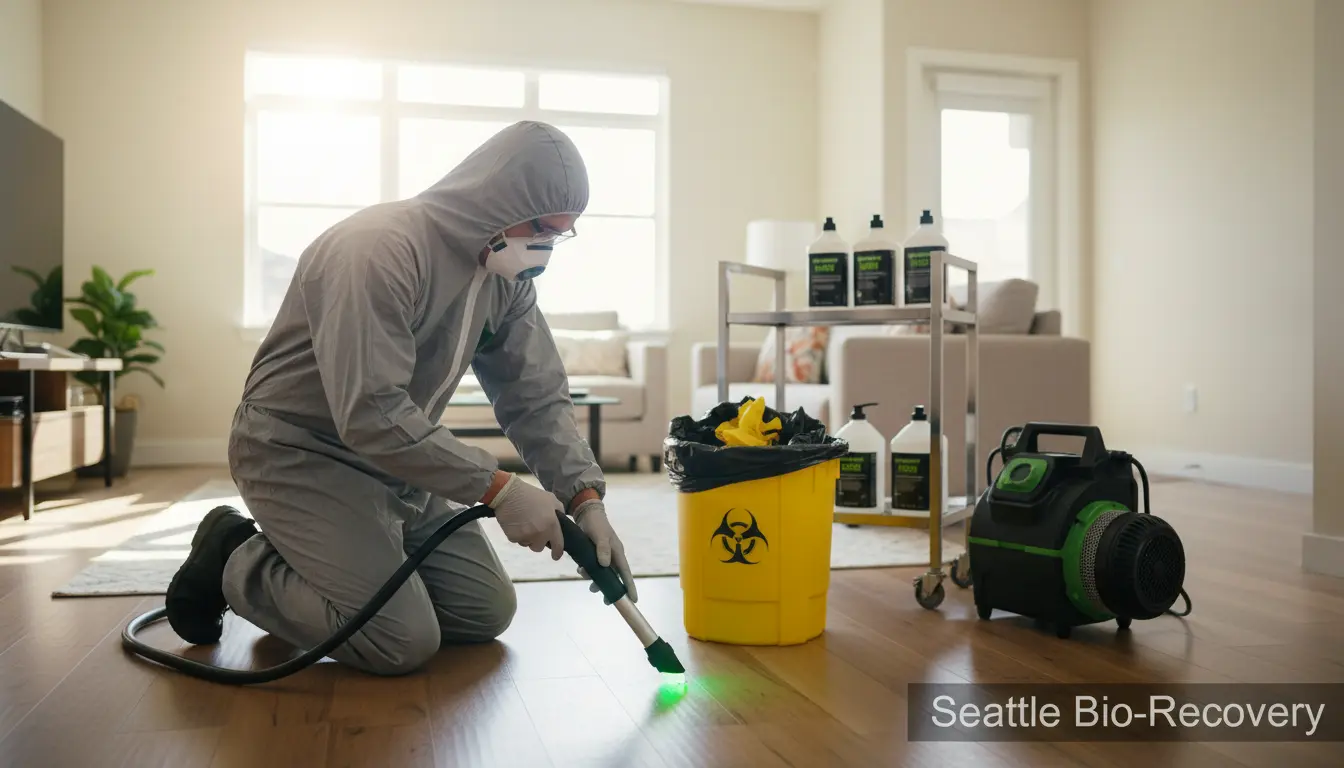
Upon arrival, our certified technicians assess the scene. We establish containment zones using barriers and negative air pressure machines to prevent cross-contamination. In Seattle’s variable weather, we secure the area against rain infiltration, which could dilute chemicals or spread contaminants.
Practical Tip: If you’re the first on scene, avoid touching anything. Ventilate if safe, but don’t enter without PPE.
Removal of Biohazardous Materials
We use specialized tools to remove all visible bio-matter. This includes:
- Scraping and vacuuming blood and fluids.
- Dismantling porous items like carpets that can’t be fully decontaminated.
For medical-related traumas, we integrate medical waste removal to dispose of sharps and tissues properly.
Disinfection and Deodorization
Next comes our full disinfection protocol, using EPA-approved hospital-grade disinfectants. We apply these via fogging for hard-to-reach areas, followed by odor control treatment to neutralize lingering smells—crucial in Seattle’s enclosed homes where odors can persist due to dampness.
Actionable Advice: After pros finish, monitor for 24-48 hours. If odors return, it may indicate missed pockets; call us back promptly.
Final Verification and Restoration
We test surfaces for pathogens using ATP meters and swab kits, ensuring levels are below safety thresholds. Then, we restore the space—painting, flooring repairs—to make it livable again.
In areas like Issaquah, where homes often have basements prone to moisture, extra drying steps prevent mold growth post-cleanup.
Practical Tips for Seattle Residents and Businesses
Living in the Emerald City means dealing with rain, ferries, and a tight-knit community—factors that influence trauma response.
Preparing for Potential Incidents
- Home Safety: Install motion-sensor lights and secure medications to prevent accidents.
- Business Protocols: In high-traffic spots like Capitol Hill cafes, train staff on emergency response and keep our number handy: (206) 699-1422.
What to Do Immediately After a Trauma
- Secure the scene: Call 911 first, then us.
- Evacuate non-essential personnel.
- Document for insurance, but avoid cleanup.
For homicide scene decontamination, police involvement means coordinating with authorities—our team is experienced in this.
Insurance and Legal Considerations
Most homeowner policies cover biohazard cleanup; contact your provider ASAP. In Washington state, landlords have legal duties under RCW 59.18 for tenant-related incidents. We provide detailed reports for claims.
Local Insight: Seattle’s progressive policies emphasize mental health support post-trauma. Pair cleanup with counseling resources from King County Mental Health.
Eco-Friendly Practices in the Pacific Northwest
We use biodegradable disinfectants to align with Seattle’s green ethos, minimizing environmental impact on Puget Sound.
Common Challenges in Seattle Biohazard Cleanup
Our coastal climate poses unique hurdles:
Dealing with Moisture and Mold
Rain can turn a cleanup into a mold nightmare. We employ industrial dehumidifiers and HEPA filtration to combat this, especially in neighborhoods like Magnolia with older homes.
Urban Density and Privacy
In bustling areas like Redmond, discretion is key. Our unmarked vans and compassionate staff respect your privacy during sensitive times.
Tip: Neighbors may notice activity—communicate briefly to ease concerns.
FAQ: Biohazard Cleanup After Trauma
1. How long does biohazard cleanup take?
It varies by scene size—small rooms take 4-8 hours, larger ones 1-3 days. Seattle Bio-Recovery aims for minimal disruption.
2. Is biohazard cleanup covered by insurance?
Yes, typically under property damage. We assist with claims and bill insurers directly.
3. Can I clean up a small biohazard myself?
No—health risks are too high. Even minor blood requires pros to avoid fines or illness.
4. What if the trauma involves a hoarding situation?
We handle compounded hazards with specialized protocols, including waste sorting.
5. Do you offer 24/7 services in Seattle?
Absolutely. Call (206) 699-1422 anytime for rapid response across the metro area.
Conclusion: Restore Safety with Seattle Bio-Recovery
Biohazard cleanup after trauma is more than removal—it’s reclaiming your space and starting the healing process. With our expertise in unattended death removal and beyond, Seattle Bio-Recovery stands ready to serve you compassionately and efficiently.
Don’t face this alone. Contact us today at (206) 699-1422 for a free consultation and let us handle the rest. Your safety is our priority in the heart of Seattle.