Accidents happen when we least expect them, leaving behind not just emotional turmoil but also hazardous messes that demand immediate and careful attention. In Washington State, particularly in bustling areas like Seattle, post-accident cleanup isn’t just about tidying up—it’s about safeguarding health, complying with local regulations, and restoring your space to a safe condition. Whether it’s a car crash on I-5 or an unfortunate incident at home in Capitol Hill, the biohazards involved can pose serious risks if not handled properly.
At Seattle Bio-Recovery, we’ve seen it all—from blood spills to unattended death scenes—and we’re here to guide you through the process. This blog post dives into the top tips for effective post-accident cleanup, tailored to Washington State’s unique environmental and legal landscape. By following these steps, you can minimize risks and speed up recovery. Ready to learn how? Let’s get started.
Understanding the Risks of Post-Accident Scenes in Seattle
Washington State’s rainy climate and dense urban living in Seattle amplify the challenges of accident cleanup. Biohazards like blood, bodily fluids, and debris can spread contaminants quickly, leading to health issues such as infections or exposure to pathogens.
Why Professional Help Matters
DIY attempts often fall short due to the invisible dangers. For instance, improper handling of blood spills can lead to hepatitis or HIV transmission. In Seattle, where regulations under the Washington State Department of Health are strict, non-compliance can result in fines or health violations. That’s why turning to experts for blood spill cleanup is crucial—our team at Seattle Bio-Recovery uses EPA-approved methods to ensure thorough decontamination.
Local factors, like the high humidity in neighborhoods such as the University District, can cause biohazards to fester if not addressed promptly. Delaying cleanup not only endangers residents but also affects property value in tight-knit communities like Magnolia.
Step-by-Step Guide to Initial Response
Your first actions set the tone for a safe cleanup. Here’s how to respond effectively right after an accident.
Secure the Area Immediately
The moment an accident occurs, prioritize safety. Evacuate the area and cordon it off with caution tape or barriers to prevent accidental exposure. In Seattle’s traffic-heavy zones like Ballard, this is especially important to avoid further incidents. Call emergency services first—911 for medical help—and then contact professionals like us at Seattle Bio-Recovery at (206) 699-1422 for specialized assistance.
Document the Scene
Take photos and notes without disturbing evidence, as this may be needed for insurance or legal purposes. Washington State’s laws require preserving potential crime scenes, so avoid moving items unnecessarily. This documentation also helps when filing claims, particularly if the accident involves vehicles on rainy Seattle streets.
Essential Safety Gear and Precautions
Before touching anything, gear up properly. Post-accident sites are rife with hazards, and skimping on protection can lead to long-term health problems.
Personal Protective Equipment (PPE) Basics
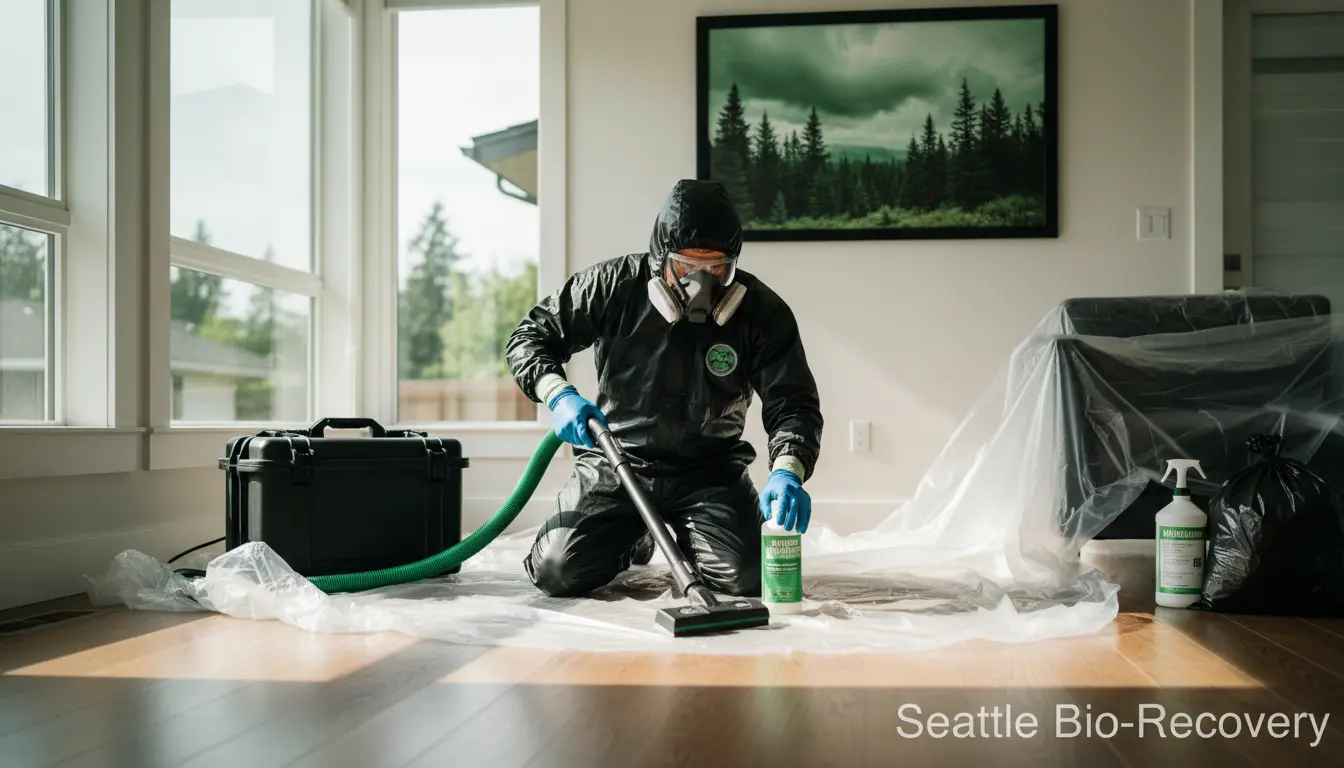
Wear gloves, masks, goggles, and full-body suits. Nitrile gloves are ideal for resisting punctures from sharp debris common in accidents. In Washington, where mold can develop quickly due to moisture, add respirators to guard against airborne particles. For comprehensive protection, consider our full disinfection protocol services, which include on-site PPE guidance.
Ventilation and Containment
Open windows and use fans to ventilate, but contain spills with absorbent materials like cat litter or commercial biohazard kits. In enclosed Seattle apartments, such as those in Renton, poor ventilation can trap odors and pathogens—address this early to prevent escalation.
Practical Cleanup Techniques
Once safety is ensured, focus on removal and disinfection. These tips are drawn from years of experience serving Seattle’s diverse neighborhoods.
Handling Biohazardous Materials
Use disposable tools like scrapers and bags rated for biohazards (red biohazard bags are standard in Washington). For blood or fluid spills, apply a 10% bleach solution after initial absorption—let it sit for 10 minutes before wiping. Avoid mixing chemicals, as this can release toxic fumes. If the spill is extensive, like in a multi-vehicle crash near Capitol Hill, professional medical waste removal is non-negotiable to handle sharps and fluids compliantly.
Deodorizing and Odor Control
Lingering smells can be psychologically distressing. After cleanup, apply enzyme-based cleaners to break down organic matter. In humid Seattle, odors from accidents can persist; our odor control treatment uses advanced neutralizers to restore freshness, especially vital in residential areas like the University District.
Waste Disposal Regulations in Washington State
Washington follows OSHA and EPA guidelines for biohazard waste. Double-bag materials and transport to designated facilities—never use regular trash. In Seattle, local haulers like those in Ballard may have specific drop-off points; always label waste clearly. For larger cleanups, such as unattended deaths, our suicide cleanup services ensure all waste is disposed of legally and discreetly.
Restoring Your Space: Post-Cleanup Steps
Cleanup isn’t over once the mess is gone—restoration ensures long-term safety.
Deep Cleaning and Sanitization
Scrub surfaces with hospital-grade disinfectants, focusing on porous materials like carpets that absorb fluids. In Seattle’s older homes in Magnolia, steam cleaning may be needed to penetrate deep. Test for residues using ATP meters if available, or rely on pros for certification of cleanliness.
Emotional and Psychological Considerations
Accidents leave invisible scars. After physical cleanup, consider professional counseling resources available through Washington State’s victim services. For property owners in high-density areas like Renton, restoring normalcy quickly aids community healing.
When to Call in the Professionals
While these tips are helpful for minor incidents, complex scenes demand experts. Signs include large spills, potential infectious materials, or emotional overwhelm. Seattle Bio-Recovery serves all of King County, from biohazard response in Ballard to emergency services in Capitol Hill. Our 24/7 response team arrives equipped, minimizing your stress.
In cases involving trauma, like vehicle accidents on SR-99, professionals handle not just the physical but also the compassionate side, allowing you to focus on recovery.
FAQ: Common Questions About Post-Accident Cleanup
1. How soon should I start cleanup after an accident in Seattle?
Immediately secure the area, but full cleanup should begin within hours to prevent bacterial growth, especially in our damp climate. Delaying can complicate the process—call experts right away.
2. What are Washington State’s specific biohazard laws?
The state mandates proper handling under WAC 296-823 for bloodborne pathogens. Non-compliance risks penalties; always use certified services like Seattle Bio-Recovery to stay legal.
3. Can I clean up a small accident myself?
For minor spills without bodily fluids, yes—with proper PPE and disinfectants. But anything involving blood requires pros to avoid health risks and ensure thoroughness.
4. How much does professional cleanup cost in Washington?
Costs vary by scene size, starting at $500 for small jobs. Factors include location and hazards; contact us at (206) 699-1422 for a free estimate tailored to Seattle areas.
5. Is insurance coverage available for biohazard cleanup?
Many homeowners and auto policies cover it under liability or comprehensive sections. Check your policy, and we’ll assist with claims during service.
Conclusion: Take Control with Seattle Bio-Recovery
Post-accident cleanup in Washington State doesn’t have to be overwhelming. By following these top tips—from securing the scene to professional restoration—you can protect your health and property effectively. Remember, in Seattle’s unpredictable weather and vibrant communities, quick action makes all the difference.
Don’t risk it alone. Seattle Bio-Recovery is your trusted partner for compassionate, compliant biohazard services across neighborhoods like University District and Renton. Call us today at (206) 699-1422 or visit our site to schedule a response. Your safety is our priority—let’s restore peace of mind together.